
Liquid AI d1-3B: The 3B Decision Engine That Skips the Chat
Stop using a PhD-level LLM to sort your mail. Liquid AI's new d1-3B is a 'decision model' that returns probabilities, not paragraphs, in under 10 milliseconds.
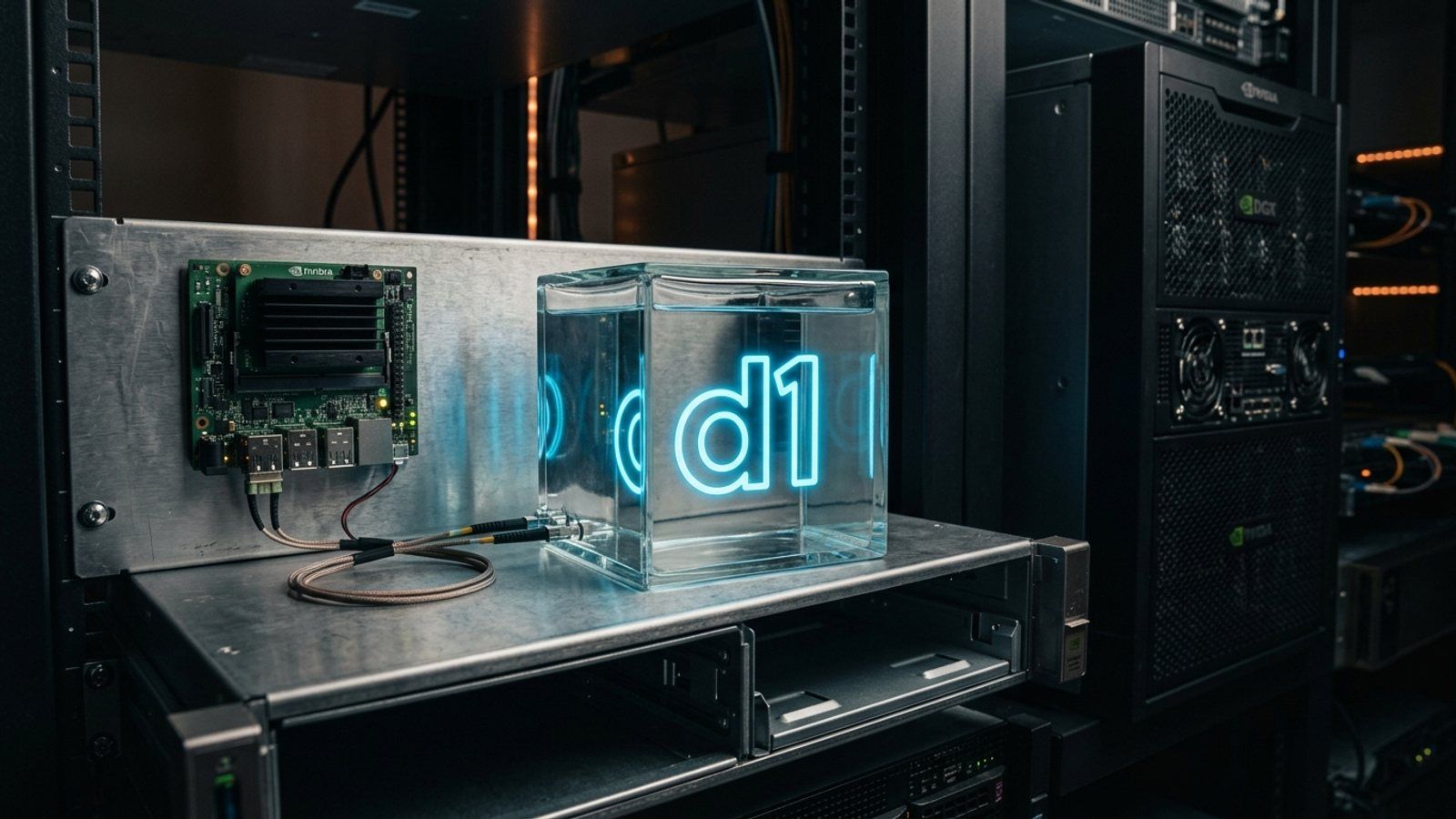
- Liquid AI released open-weight d1-3B and d1-omni-600M models on October 7, 2026.
- These models produce zero output tokens, returning calibrated probabilities in a single forward pass.
- d1-3B hits 8ms latency on an NVIDIA RTX 4090 and 16ms on a Jetson AGX Thor edge module.
- Free for commercial use under the LFM Open License v1.0 for companies with <$10M revenue.
Liquid AI d1-3B is a 3.12-billion parameter 'decision model' that replaces generative LLMs for tasks like routing, moderation, and scoring. Instead of writing text, it uses a single forward pass to return structured probabilities (Noul, Choice, or Score) in as little as 8ms. It is open-weight and runs locally on everything from a MacBook to an NVIDIA Jetson edge device.
I keep saying this to the group chat: stop hiring a PhD to sort your mail. We’ve spent the last two years forcing massive, $200-a-month chat models to answer ‘yes’ or ‘no’ for basic ticket routing and safety checks. It’s wasteful. It’s slow. And frankly, it’s bad engineering.
On October 7, 2026, Liquid AI decided to solve the ‘classification tax’ by open-sourcing d1-3B and the experimental d1-omni-600M. These aren’t just smaller LLMs; they are a different breed of software called ‘decision models.’ They don’t write.
They don’t chat. They just decide. Liquid AI released the weights on Hugging Face, and it’s a direct shot at the current generative-only status quo.
What is a decision model, really?
A standard LLM like GPT-4o generates its answer token by token. You wait for the ‘Thinking…’ phase, then it spits out a JSON block or a ‘Yes.’ that you have to parse with regex like it’s 2005.
Liquid AI d1-3B skips the poetry. It uses a single forward pass—one run through the model—to return calibrated probabilities across a fixed set of outcomes per the official docs.
You give it a ‘state’ (like a customer email or a camera frame) and one of three primitives:
- Noul: A binary gate. ‘Is this person angry?’ returns a probability from 0 to 1.
- Choice: A pick-one-from-many. ‘Which department handles this?’ returns a distribution over your options.
- Score: A weighted position on a rubric. ‘Rate this bug from 1 to 5’ returns a probability for each level.

Because there are zero output tokens, the latency is floor-level. We’re talking 8ms on an NVIDIA RTX 4090 according to Liquid’s own benchmarks. That is real-time capability that blows traditional chat-based routing out of the water.
The receipts: latency and hardware
If you’re building for the edge, this is the one. I’ve seen teams struggle to get local LLMs running on hardware that doesn’t cost as much as a used Honda. Liquid AI built d1-3B to run the full NVIDIA stack, from the DGX in the data center down to the Jetson on a factory floor.
The numbers Liquid published on October 7 are a flex. d1-3B answers a single question in 16ms on a Jetson AGX Thor. Even the tiny Jetson Orin Nano can handle it in 50ms.
On the desktop side, an Apple M5 Pro clocks in at 30ms. This is the first time I’ve seen a 3B model with this much ‘reasoning’ density that doesn’t choke on a laptop without a dedicated GPU.

It’s also fully Jev-API compatible as noted in early technical reviews, meaning if you’ve already built around the Jev Classifier, you can swap this in as a local backbone without rewriting your entire logic layer.
Where d1-3B loses: the knowledge gap
Don’t get it twisted—this isn’t a replacement for your research agent. Because it’s optimized for decision-making and classification, d1-3B is notoriously weak on general knowledge. It scored a 23.8 on ‘Knowledge’ benchmarks, which is basically ‘failing grade’ if you’re asking it who the 14th president was.
It is a specialist. It’s the guy on the assembly line who can spot a defect in a circuit board in 10 milliseconds but doesn’t know what year the Titanic sank.
If you try to use this to write a blog post or summarize a PDF, you’re going to have a bad time. It literally cannot do it; the model reports 0 output tokens every single time.
The licensing and the bottom line
The pricing is where the ‘Mogul’ in me perks up. The hosted API is billed at $0.04 per million input tokens with zero output token cost according to Liquid’s pricing page. That’s roughly 19x to 200x cheaper than using a flagship like GPT-6.1 Sol for the same task.
If you want to run it yourself, the LFM Open License v1.0 is the catch. It’s free for commercial use and fine-tuning as long as your annual revenue is under $10 million.
If you’re a whale, you’re going to have to cut Liquid a check. For the rest of us building lean agents, this is the efficiency play we’ve been waiting for.

Liquid AI is cooking with these ‘single-pass’ primitives. It’s the most ‘Ops’ move I’ve seen in AI all year. Efficient, measurable, and fast as hell.
#TheAIMogul
Bottom lineIf your agent pipeline spends 90% of its budget asking a chat model to 'answer yes or no,' you are burning money. Liquid AI d1-3B is the professional-grade fix for the classification tax.