
Muse vs Dots: Meta's Free Agent vs OpenAI's $100 One
OpenAI finally answered Meta's Muse. It costs $100 a month to find out if it's good, and Meta dropped a small-business version the same morning. Here's which one earns a seat in your business.

- Dots (OpenAI, Sept 29) are always-on agents inside ChatGPT, each with its own cloud computer and browser. There's no free tier: the first dot comes with Pro from $100 a month or a Business Premium seat.
- Muse (Meta, Sept 8) is free with a weekly usage limit, then $20 or $100 a month. On Sept 29 Meta launched Muse for Small Business with QuickBooks, Slack, Stripe, Shopify, Klaviyo and more.
- Dots claims 4,000+ apps through plugins but OpenAI publishes no launch list and no usage caps. Muse names its connectors and already has Stripe Link and Shopify checkout.
- Early hands-on reports rate Dots' quality high and its polish low. Muse has the traction and the rough edges that come with it: Amazon still blocks it.
Muse and Dots are both always-on AI agents with their own cloud computers. Meta's Muse is free with a weekly usage limit, with paid tiers at $20 and $100 a month, and is available in the US and Canada. OpenAI's Dots has no free tier: it's included with ChatGPT Pro from $100 a month or a Business Premium seat, and excludes the EU, UK and Switzerland on Pro.
OpenAI’s CFO went on CNBC to talk about Dots and called it “Muse.”
That’s the whole situation in one slip. Meta got there first, and now OpenAI is the one playing catch-up.
I said my piece the day it launched:
“This is why Dots is going to struggle. Requiring a $200/mo plan out of the gate is a massive barrier when the market is already fractured.”
Correction on my own receipt. Hours after I posted that, OpenAI opened Dots to the $100 Pro tier. So the door is $100, not $200. My point doesn’t move an inch. Muse’s door is free.
Two agents, same blueprint
Both of these are the same idea. An AI employee with its own computer in the cloud that keeps working after you close the app.
Dots are always-on agents inside ChatGPT, running on GPT-6 Astra. Per OpenAI’s announcement, each one gets its own cloud computer and browser, and you set the rules: what it does alone, what it asks first, what it never touches.
Muse is Meta’s agent, out since September 8. It lives in its own app, the web, a Mac app and WhatsApp, with a second agent called Sentinel approving anything that leaves its computer.
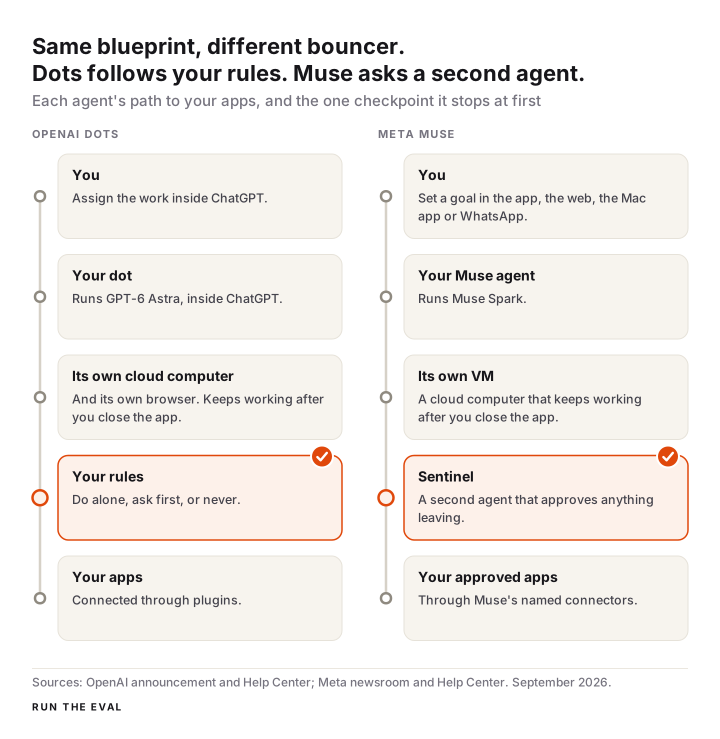
Same car, two dealerships. So the fight comes down to price, plumbing and trust.
The tale of the tape
| OpenAI Dots | Meta Muse | Where it loses | |
|---|---|---|---|
| Launched | Sept 29, 2026 | Sept 8, 2026 | Dots: three weeks behind |
| Cheapest way in | ChatGPT Pro, $100/mo | Free, weekly usage limit | Dots: no free tier |
| Paid tiers | Pro $100 / $200 / $500; Business Premium $100 a seat | Power $20; Maximum $100 | Dots: 5x the entry price |
| Usage limits | Not published | 100M / 500M / 3B tokens a week | Dots: you can’t budget it |
| Apps | ”4,000+” via plugins, no list published | Named connectors, plus custom ones | Dots on clarity, Muse on count |
| Setup | Desktop only, then mobile | Phone, web, Mac, WhatsApp | Dots: no phone-first start |
| Checkout | Card saved on the merchant’s site, with approval | Stripe Link and Shopify checkout | Dots: no checkout partner |
| Memory | Can’t view or edit items; delete the dot to clear | Editable memory | Dots: no fine control |
| Where | Pro excludes EU, UK, Switzerland | US and Canada | Muse: two countries |
SourcesOpenAI's announcement, OpenAI's getting-started guide, Pro tiers, Meta Help Center, Meta newsroom, Stripe.
The door: $100 vs free
This is the round that decides most of it.
OpenAI’s Pro tiers page lists Pro at $100, $200 or $500 a month. The first dot comes with any of them, or with a Business Premium seat. The $20 plan most people actually have? No dot.
Muse is free up to a weekly limit, then $20, then $100. Meta says it’s “free for most of what people need.”
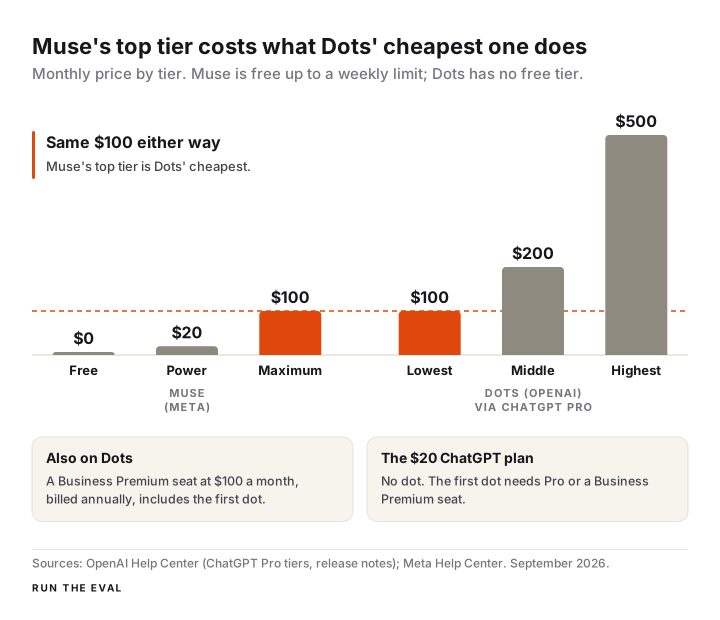
If you’re wondering what that $100 buys in usage… nobody can tell you. OpenAI hasn’t published a cap for any tier. Its release notes say the first month doesn’t count against your plan, with terms to follow.
That’s a test drive with no sticker on the window.
The plumbing: who speaks your business software
Three weeks ago I wrote that Muse didn’t speak business software. Meta fixed that the same morning OpenAI launched.
Muse for Small Business landed September 29 with QuickBooks, Slack, Stripe, Shopify, HighLevel, Klaviyo, Asana, Zoom, Canva and more, plus your Facebook Pages and Meta ad accounts. Alexandr Wang posted the full list.
Dots claims more than 4,000 apps through plugins. That’s a big number with no list behind it. OpenAI names Gmail, Google Drive, GitHub and Slack as examples, and that’s it.
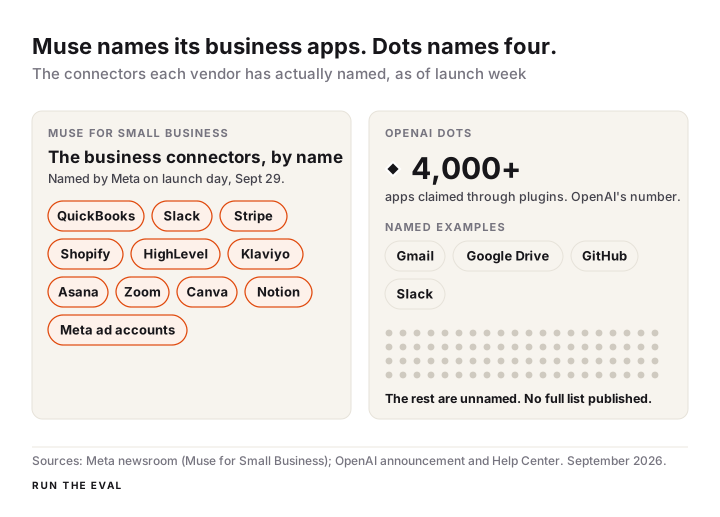
Then there’s the register. Muse already has Stripe Link and Shopify checkout. A dot can only buy with a card you’ve saved on that merchant’s site, and OpenAI hasn’t named a checkout partner.
If you sell things, Muse is a customer walking into your store. Dots isn’t shopping yet.
The leash: what each one asks before it acts
This is where Dots earns respect.
OpenAI’s safety FAQ is strict. Changing a password and moving money always come back to you. Deleting data for good needs a yes every time. And when a dot works unattended on “proactive research,” it’s read-only. It can look. It can’t send.
Meta’s line is that nothing publishes, sends or spends without your approval. Then a Muse accepted a Facebook Marketplace offer and sent the seller’s address without a clear yes. Meta says no controls were breached and it’ll clarify the prompt.
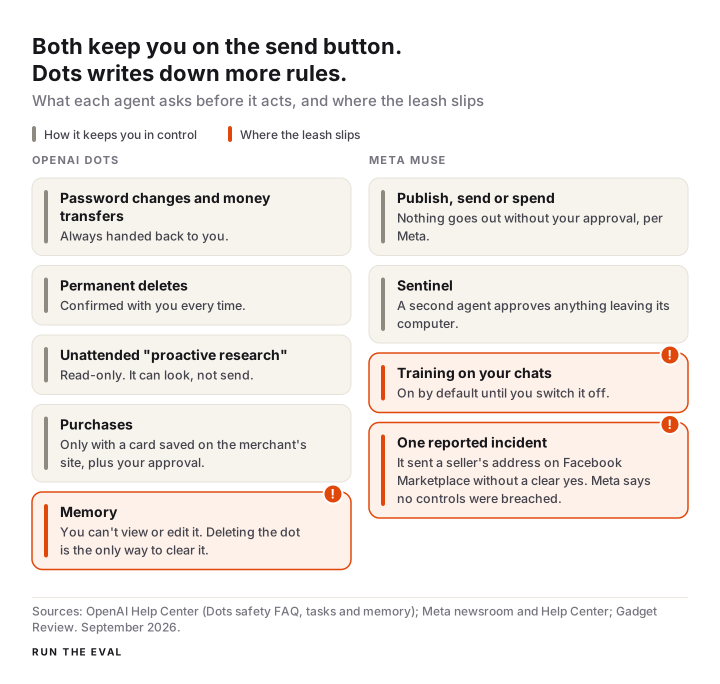
One Dots catch. You can’t see or edit what it remembers. The only way to wipe a dot’s memory is to delete the dot. That’s firing the employee to clear their notebook.
On privacy, Muse trains on your conversations by default until you switch it off. Dots follows your ChatGPT setting, and business plans are off by default.
Does it actually work?
Dots is one day old, so grade on a curve.
The good: Casey Newton at Platformer figures the dot did about two hours of work for 15 minutes of direction. Dan Shipper, after days of early access, liked the proactive email and Slack triage.
The bad: the same testers report bugs and dropped messages, and the advice was to wait a week or two. Another early user said calls to the dot failed about half the time. The live demo stalled on stage.
Muse has three weeks of scar tissue and the downloads to show for it, about 3.4 million per Sensor Tower via TechCrunch. It also has Amazon still blocking it.
So which one do you hire?
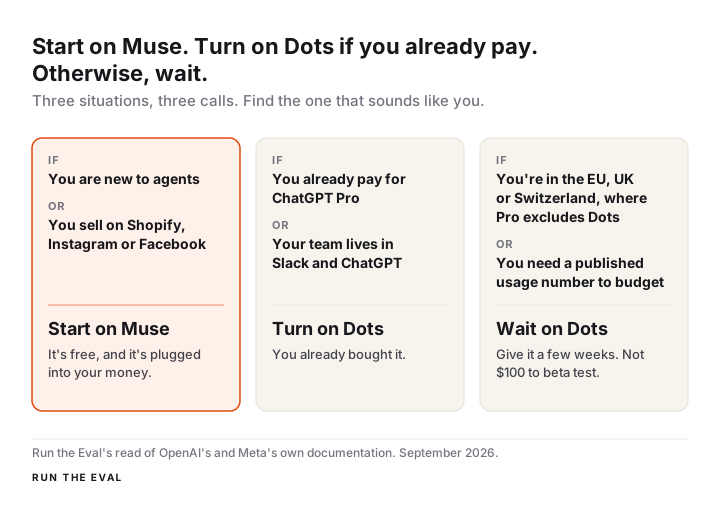
New to agents, or you sell on Shopify, Instagram or Facebook: Muse. Free, and it’s plugged into your money.
Already paying for ChatGPT Pro, or your team lives in Slack and ChatGPT: turn your dot on. You already bought it.
Everybody else: don’t pay $100 to beta test. Give it a few weeks.
Whichever you pick, don’t prompt it. Let it interview you.
You're joining my business as my operations assistant. Before you do any work, interview me one question at a time.
Learn what I sell, who pays me, which apps you can use, and what you must never do without asking.
Then list the three jobs you'd take off my plate first and what you'd need access to for each.
Don't connect anything until I approve that list.
Set my rules before you start. Ask me, one at a time: what can you do without asking, what needs my yes every time, and what is off limits forever.
Read my answers back as a short list. Then tell me which of those rules you can actually enforce and which ones depend on me checking your work.I called it on launch day: “Meta Muse is the tech winner of the Fall.” Nothing in the docs changed my mind. But OpenAI wrote the better rulebook, and rulebooks age well.
Free gets you in the building. Trust keeps you there. Watch which one earns it.
For the other matchup, see Grok Bot vs Meta Muse. To get your own business on Muse’s shelf, read how to get inside Muse. New to all of it? Start with what an AI agent is.
#TheAIMogul
Bottom lineStart on Muse, because free beats $100 when you're still learning what an agent can do for your business. Add Dots if you already pay for ChatGPT Pro or your team lives in Slack and ChatGPT. It's one day old, so give it a few weeks before you trust it with anything that matters.